
Associated gas of the last separation stages. Compression of low-pressure APG
The question of whether to burn or not burn associated gas in flares is decided in Russia definitively and irrevocably. And today, the special task is to maximize the use of associated gas of the last separation stages, which takes a significant share in APG losses.
ASSOCIATED PETROLEUM GAS IS OIL SEPARATION PRODUCT
Oil does not immediately become a commercial product. This is preceded by a multi-stage technological treatment process.
At each field, reservoir fluid from wells is preliminarily treated at oil production and treatment facilities. Further, oil is transported to the central production facilities, where its final treatment is made to the commodity condition and delivery to the consumer. The goal of oil field treatment is the removal of water, various mechanical impurities and the extraction of petroleum gas.
Associated petroleum gas (APG) is a mixture of hydrocarbons with the lowest molecular mass (methane, ethane, propane, butanes, etc.). It is contained in formation fluid and is separated from it by separation. APG is a valuable hydrocarbon resource, it is used both as fuel and as raw material for obtaining various chemicals. From associated gas, through chemical processing, propylene, butylene, butadiene is produced for the production of plastics and rubbers.
The process of degassing of reservoir oil, i.e. the allocation of associated gas from it, can begin as early as in the tubing pipes of the oil well. As products flow from the wells through the oil and gas pipelines, gas is also extracted. Thus, the flow of reservoir oil passes from a single-phase state into two-phase - degassed oil and associated petroleum gas. This occurs as a result of pressure drop and temperature changes in formation fluid. At the same time, the volume of gas released from the reservoir oil increases.
However, joint storage or transportation of oil and APG is economically inexpedient. As a rule, the volume of the released gas is several times higher than the volume of the liquid. It would take huge sealed containers and pipelines of large diameter. Therefore, at the production and treatment facilities, oil and gas stream is divided into two - oil and gas. The separation of the flow occurs in special apparatuses-separators (in the photo below), in which conditions are created for more complete separation of APG from oil. The degassing of oil at certain regulated pressures and temperatures is called separation.
SEPARATION STAGES
Separators of various types (mainly horizontal cylindrical ones) are used to extract APG. At oil and gas treatment facilities, oil separation is usually carried out in several stages (steps). The separation stage is called the separation of gas from oil at a certain pressure and temperature. Multi-stage separation allows you to get a more stable oil than a single-stage oil. The number of stages of separation depends on the physicochemical properties of oil produced, the formation pressure, watering and fluid temperature, as well as the requirements for commercial oil.
The effectiveness of multi-stage separation is especially noticeable for light oil fields with high GOR and well head pressures. Adjustable pressure and temperature create conditions for more complete separation of gas from oil. Pressure at the separator of the 1st stage is always greater than at the separators of the second and subsequent stages. Pressure indicators at separation stages depend on many factors that are taken into account in the development of the field and are introduced into the process flow diagram. The number of separators depends on the volume of oil produced.
The gas evolved requires special treatment and the use of appropriate process equipment. As a rule, the treatment of APG includes the following complex of measures: drying; removal of mechanical impurities; desulfurization; gasoline extraction (extraction of liquid hydrocarbons С3+above); removal of non-combustible gas components (nitrogen, carbon dioxide); cooling; compression.
Treated associated gas is usually distributed as follows (see figure below). Part of it goes to the needs of the field - fed to oil heaters, used as a fuel for gas reciprocating or gas turbine power plants, boiler houses. The other part is transported to an external customer, for example, to a gas processing plant to obtain gas chemistry products (if the GPP is located in the oil production area). APG is used for re-injection into the reservoir in order to increase oil recovery (gas lift system).


APG SHOULD BE MAXIMALLY USED
Until recently, the above scheme only showed the use of APG of the 1st separation stage. Associated gas of the second and subsequent stages, as a rule, was sent in full to the flare line for combustion. The reason is that gas from the last stages is the most difficult in treatment for further use.
Such APG in terms of density and content of C3+above components is much "heavier" than gas of the first stage. For example, the gas density of the 2nd stage can exceed 1700 g / m3, and the C3+above content - 1000 g / m3. Accordingly, the amount of condensate in the APG pipelines of the 2nd and subsequent stages is much larger, in comparison with the same index in the gas pipeline of the 1st stage. Gas of the end stages is also distinguished by an increased content of mechanical impurities and droplet moisture. Plus to this - it must necessarily be compressed.
That is, the rational use of APG at the last stages requires the creation of an additional gathering and treatment infrastructure, which increases the cost of associated gas and reduces the profitability of the fields. Therefore, many producing companies went to the costs extremely reluctantly, and often had to be eliminated from the task of rational use of such APG.
The situation began to change from January 2009, when the government determined a rigid standard for the use of associated gas at a level of 95%. The question of whether to burn or not burn associated gas in flares is decided in Russia definitively and irrevocably. It became expensive to burn APG. However, not only economic sanctions work. Soot from burning flares vilifies the reputation of oil companies.
Therefore, every year the number of fields increases, where they not only save on fines and compensation payments, but also derive direct economic benefits from the rational use of APG. For such efficient environmental-saving companies, priority is given to taking care of their own professional prestige in the eyes of the state and society.
Today, in conditions of the decline in oil production in many fields, the maximum use of associated gas of the last separation stages acquires special significance. It is this gas that takes a significant share in the losses of APG. Taking this into account, oil and gas companies paid close attention to the modern technological possibilities of its rational use. And those who have already made the necessary efforts, in fact, were convinced of the correctness of their decision.
COMPRESSING IS IMPORTANT STAGE IN TREATMENT OF LOW-PRESSURE APG
Let's note one more important factor: associated petroleum gas of the 2nd and subsequent stages of oil separation is low-pressure. Its own pressure, which does not exceed 0.4-0.5 MPa, is not sufficient for transportation of APG between the oil and gas production facilities or for pumping into the pipeline to the main compressor station that provides gas delivery to an outside customer.
The process task of compressing low-pressure APG is solved taking into account the specific features of specific fields. The fields are equipped with so-called "small" compressor stations (CS), which are based on low-pressure booster compressor units (BCU). In the event that gas pressure is close to the vacuum (0.001-0.01 MPa), vacuum compressor units are used at the compressor station (VCU, in the photo below).
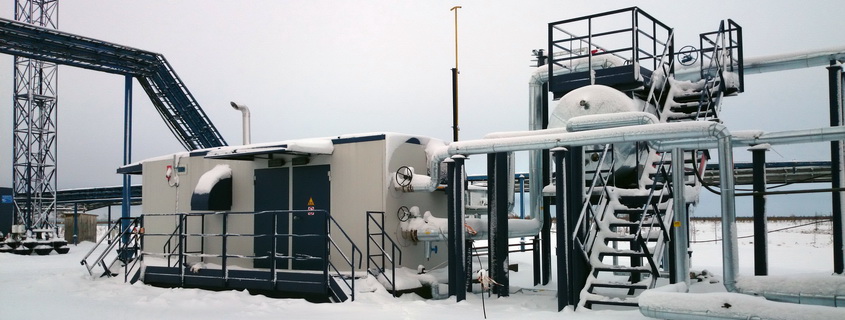
To ensure the reliable operation of the CS, special engineering solutions are developed, proceeding from the gas composition, operating conditions and design requirements.
FEATURES OF LOW-PRESSURE GAS COMPRESSING
To compress the APG of the last separation stages, BCU and VCU, as a rule, are used on the basis of screw oil-filled compressors. Let us consider the solution of some problems arising when compressing a low-pressure gas.
Necessity of post-treatment of heavy (wet) APG. Despite the fact that the compressor unit (CU) often receives already treated gas, the content of mechanical impurities and droplet moisture in it does not correspond to the conditions of normal operation of high-efficiency CUs. An additional filtering system is required, which expands the capabilities of its main components (gas oil separator and coalescent filters):
- At the gas inlet, a filter scrubber is installed, equipped with an automatic drainage system for evacuation of condensate;
- At the output of the CU, additional filters for fine gas purification are installed. They, like the filter scrubber, are built into the existing package, which provides a compact arrangement of equipment;
- Together with the CU, compact adsorptive or refrigerating gas dehumidifiers can be supplied in a separate shelter (pictured below).
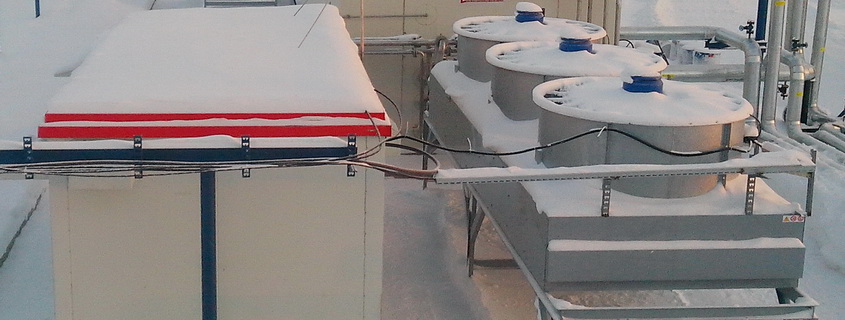
Risk of condensation. The operation of compressor units on heavy (wet) gas during compression is always accompanied by a risk of condensation within the system. Two problems arise: 1) the dissolution of a large amount of hydrocarbons in oil, leading to an increased saturation of oil with gas condensate, a reduction in the kinematic viscosity of oil, and an increase in the oil level in the oil tank; 2) the formation of condensate in the working cells of the compressor, which leads to an increase in the power consumption for external compression and power to compress one kilogram of gas. The problem is solved by the following method:
- There is carried out detailed analysis of gas component composition and calculations in a special program that creates a theoretical model of gas behavior under certain conditions (temperature and pressure). This makes it possible to determine such parameters for the expansion of the operating temperature range of oil and gas, which allow to exceed the dew point for the pumped gas;
- In the CU oil system, more viscous oil is used.
Negative impact of extremely low pressure of APG, close to vacuum (0.001 ... 0.01 MPa). Compression of gas with a pressure close to vacuum leads to the following problems: 1) there is a large difference in the inlet and outlet pressure of the CU, as a result of which gas pressure in the unit is discharged not only through the discharge flare, but also through the inlet pipeline. In this case, the oil is "entrained" from the oil system into the inlet filter scrubber; 2) under the impact of vacuum, air can enter the compressor unit, which increases the explosion hazard of the technological process. Possible solutions are:
- Equipping the system of CU input valves with upgraded high-speed valves with electromechanical drives and spring cutters, which allows you to cut the input pipeline from the main line;
- CU equipping with oxygen sensors, which determine its content in compressed gas.
Change in the characteristics of source gas. Under the terms of some projects, compressor units compress mixed gas coming from different facilities of the mining complex. Accordingly, its main parameters (composition, density, dew point temperature, calorific value) can vary. The parameters of source gas change also with long-term production at one site - due to the depletion of hydrocarbon reserves, water cuts, etc. In order to control this process (and then, if necessary, to vary the performance of characteristics of CU), the compressor units can be equipped with the following additional equipment:
- Flow chromatograph with a sampling device for determining the composition and calorific value of gas;
- Flow meter for metering dew point temperature of gas on water and hydrocarbons (with a sampling device);
- Metering device for the flow rate of compressed gas (pictured below).
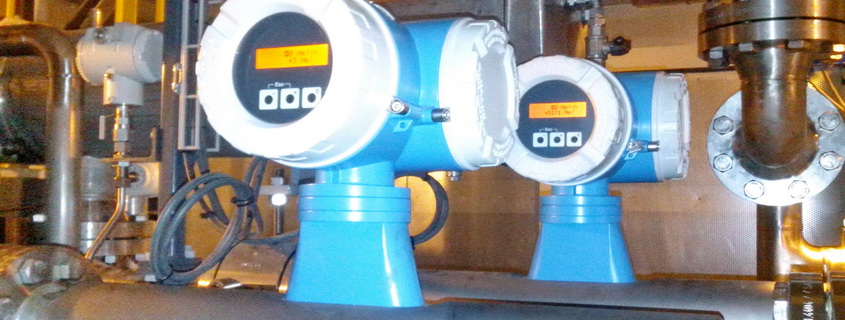
Operation conditions. Often the compression of low-pressure APG takes place under severe conditions: 1) climatic conditions, when the minimum air temperature reaches minus 60 ° C, and the temperature of the coldest five-day period is minus 50 ° C; 2) features of the gas composition - for example, a high content of hydrogen sulfide compounds; 3) remoteness (inaccessibility) of facilities, which complicates maintenance and monitoring of the equipment operation. Therefore, the following solutions are used in practice:
- Choice from various variants of execution: CU of hangar (workshop) type on an open frame, the package in all-weather shelter, CU in special Arctic version;
- CU equipment with upgraded heat exchange systems, oil system equipment with an automatic flow viscometer;
- Use of special alloys and corrosion-resistant materials in the production of compressor units;
- Equipping CU with soft starter;
- Redundancy of some elements of the equipment inside the packaged unit (for example, dual oil system filters or cooling system pumps), especially when compressor stations are operated without a standby unit;
- Use of modern ACS (pictured below), which automatically supports the unit in the operating mode, provides operational parameters and communication with the upper level of the APCS, controls the life support and safety systems.
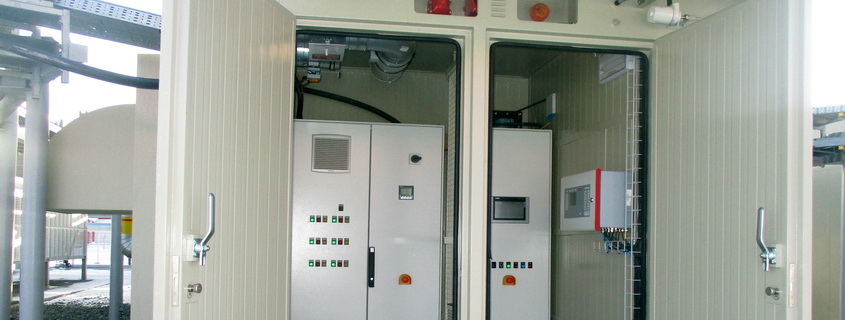
ACCUMULATED EXPERIENCE IS THE KEY TO SUCCESS
In the oil and gas community, a tradition has developed - the decision of non-standard technological tasks to trust engineering teams, repeatedly tested in practice. The experience of implementing projects to compress low-pressure gas is concentrated today in the company ENERGAS.
Compressor unit of the company ENERGAS operate in compressor stations at a number of oil and gas production facilities. These are auxiliaries power supply complexes (APSC), oil treatment units (OTU), Central Processing Facilities (CPF), oil verification facilities (OVF), booster pump stations (BPS), Main Transfer Pumping Stations (MTPS), preliminary water removal units PWRU), central production facilities (CPF), Central oil / gas gathering station (COGGS), integrated gas treatment units (IGTU).
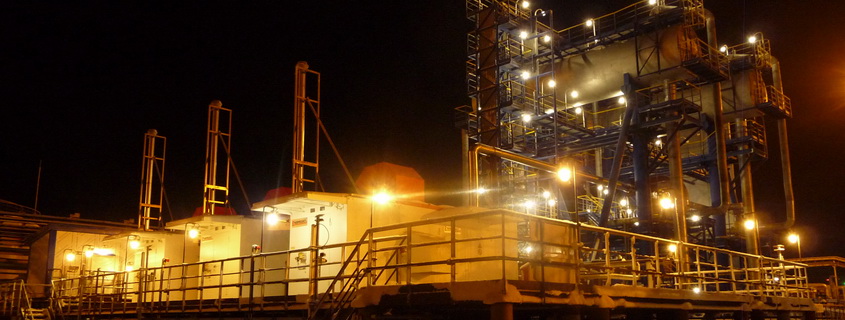
The geography of ENERGAS projects on the compression of low-pressure APG covers the territory from the Republic of Belarus to the Far North (in the photo below) and to the Republic of Sakha (Yakutia). In total, 53 such projects are active in the company, 125 compressor units are involved in them.
79 BCUs compress associated gas with a pressure in the range of 0.16 ... 0.4 MPa at the fields: Konitlorskoye, Zapadno-Kamynskoye, Muryaunskoe, Yukyaunskoye, Severo-Labatyuganskoye, Tromjeganskoe, Zapadno-Chigorinsky, Verkhne-Nadymskoye, Yuzhnoye Khylchuyu, Talakanskoye, Rogozhnikovskoye, Bittem, Ulyanovsk, Tevlinsko-Russkinskoe, Verkh-Tarskoe, Ai-Pimskoe, Igolsko-Talovoe, West-Moghutlorskoye, Verkhnekolik-Eganskoe, East Messoyakhskoye, Pyakyakhinskoye, Yuzno-Nyurymskoye.
Another 36 units operate at very low pressure APG (0.01 ... 0.15 MPa) at the fields: Alekhinskoye, Bystrinskoye, Vatyeganskoye, Fedorovskoye, Lyantorskoye, Gezhskoye, Varandeyskoye, Rechitskoe, Rogozhnikovskoye, Severo-Labatyuganskoye, Talakanskoe, Messoyakhskoye, Konitlorskoye, Zapadno-Surgutskoye.
For compressing associated gas with a pressure close to the vacuum (0.001 ... 0.01 MPa), 10 CUs are used at the Ety-Purovsky, Vyngayakhinsky, Sovetskiy, Vakhsky, Yarayner, Vyngapurovsky (in the photo below) fields.

Life convinces: for the rational use of APG in the maximum possible volumes, it will require purposeful efforts of the state, society and business, well-coordinated work of oil workers, designers and manufacturers of special process equipment.